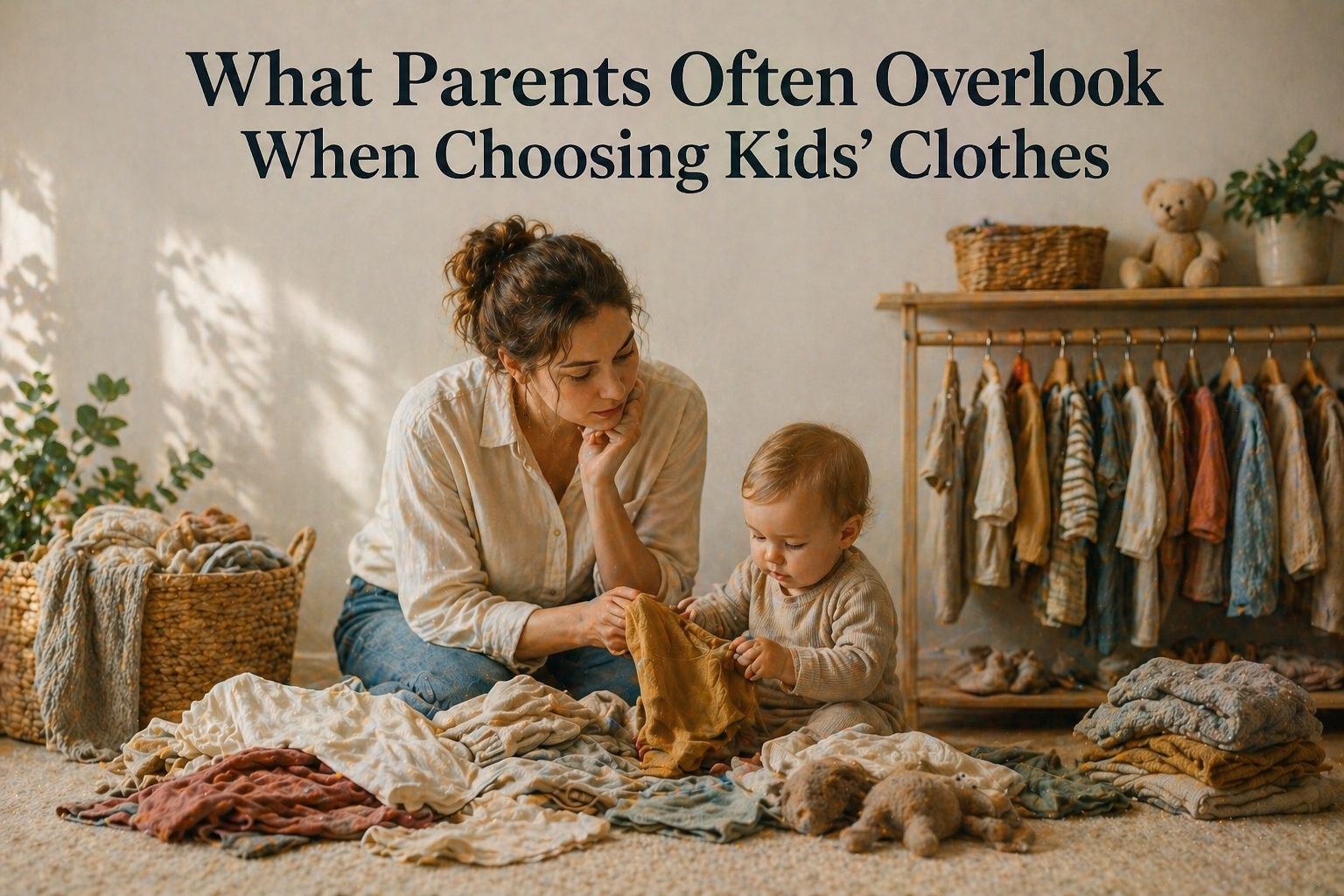

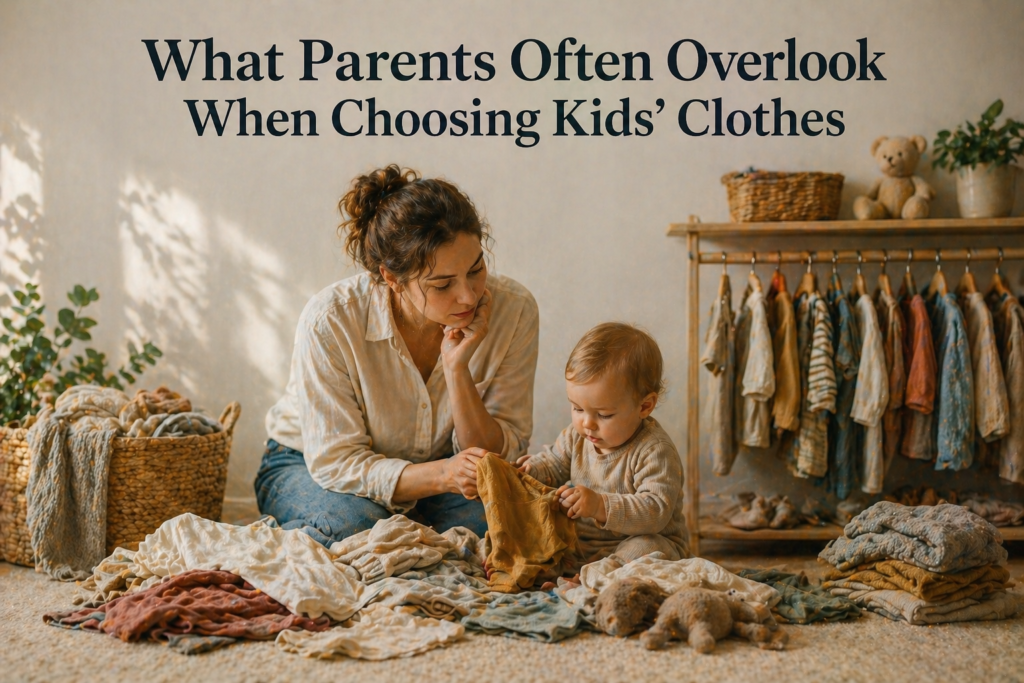
You can pick something that looks right in every way and still feel like it doesn’t land. That’s usually where what parents often overlook when choosing kids’ clothes starts to show — not in the store, but later, in the middle of an ordinary day.
The Quiet Difference Between “Fits” and “Works”
It’s easy to rely on visible checks.
The size matches. The length looks correct. Nothing seems too tight or too loose. From that angle, the decision feels solid. But there’s a small gap between something that fits and something that actually works over time.
Clothing that “works” doesn’t just sit correctly when standing still. It holds up through movement, changes in position, and the pace of the day.
A piece can pass every visual test and still feel slightly off once it’s worn for longer than a few minutes. Not enough to reject immediately, but enough to create постоянное ощущение, что что-то нужно поправить.
That difference tends to get missed.
What Doesn’t Show Up Right Away
Some issues don’t appear at first.
They come later, after the child has moved, sat down, stood up again, or simply worn the same thing long enough. That delay makes them harder to connect to the clothing itself.
A few details tend to reveal themselves only over time:
- fabric that becomes warmer than expected
- seams that start to rub after repeated movement
- areas that shift slightly out of place and stay there
None of these are obvious in the beginning. But they accumulate.
And when they do, the overall experience changes — quietly, without a clear момент, когда всё стало “не так”.
The Speed of Getting Dressed
There’s also the process itself.
Some clothes are easy to put on without thinking. Others require small, precise actions — finding the right opening, adjusting layers, pulling something into place more than once.
Individually, those steps don’t seem important.
But when mornings are rushed, they matter a lot. The difference between something that goes on immediately and something that takes effort becomes noticeable very quickly.
That’s often where what parents often overlook when choosing kids’ clothes becomes visible — not in how the одежда носится, but in how она надевается.
When Preference Looks Like Random Choice
From the outside, children’s preferences can feel inconsistent.
They wear one item constantly and avoid another, even if both seem similar. But if you watch closely, the pattern isn’t random.
The pieces that get chosen again usually have a few things in common:
- they feel the same every time
- they don’t need adjustment during the day
- they don’t introduce new sensations after being worn for a while
That consistency creates trust.
Anything that breaks that pattern — even slightly — tends to be left aside, often without explanation.
The Part That’s Hard to Notice
Most overlooked details are not visual.
They’re felt. And because they’re felt rather than seen, they don’t always become part of the decision-making process.
That’s what makes them easy to miss.
You don’t see how something shifts after ten minutes. You don’t see how often it needs adjusting. You don’t see the small interruptions it creates during the day.
But the child does.
When Attention Moves to the Right Place
Once you start noticing these patterns, the focus changes.
It’s less about how something looks at the beginning and more about how it behaves over time. The question shifts from “does this fit?” to “does this stay comfortable without effort?”
And that’s where what parents often overlook when choosing kids’ clothes becomes clearer. Not as a checklist, but as a series of small, almost invisible factors that shape the entire experience without ever being directly pointed out.