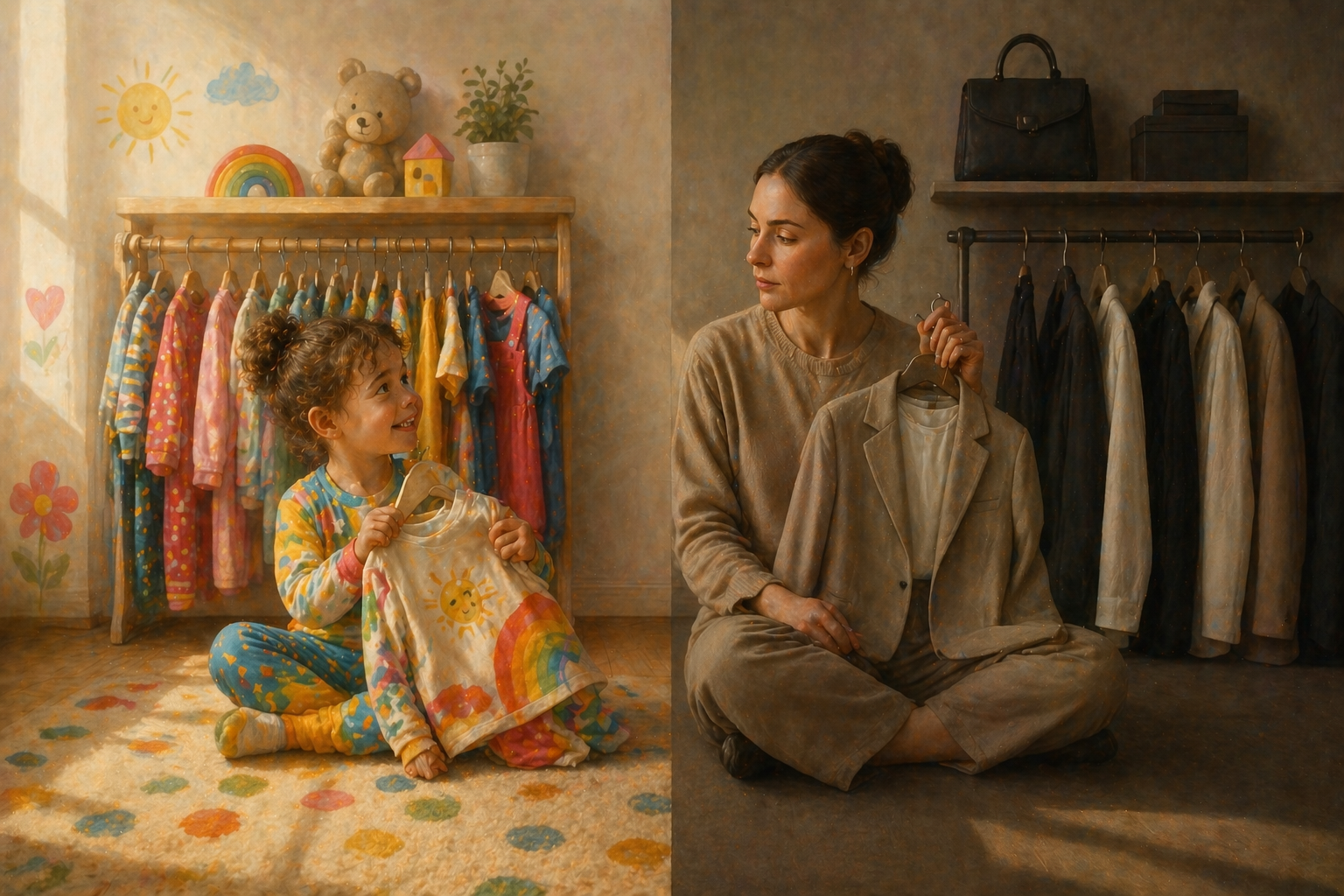

At first glance, smaller sizes might seem like the only real difference. But the moment you start noticing how children move, it becomes obvious why why children’s clothes need to feel different from adult ones isn’t just a design choice — it’s something much deeper.
Movement Comes First, Not Appearance
Watch a child for a few minutes and everything shifts.
They don’t adjust their behavior to match what they’re wearing. They run, crouch, twist, climb, and change direction without warning. Clothing is expected to keep up, not the other way around.
That’s where the first real difference appears.
Adult clothing often assumes controlled movement — walking, sitting, standing. Kids don’t move in that pattern. Their motion is less predictable, more abrupt, sometimes repetitive in ways you wouldn’t expect.
When something restricts even slightly, it becomes noticeable fast. Not always as discomfort, but as resistance.
And resistance changes behavior.
The Way Fabric Is Experienced
There’s also a sensitivity that tends to be underestimated.
Adults get used to textures over time. A seam, a slightly rough surface, a fabric that warms up — all of it fades into the background. For children, it often doesn’t.
They don’t filter sensations the same way.
A small detail can stay present much longer than expected. Not painful, not even clearly irritating, just… there. And that “there” can be enough to distract or bother them without a clear explanation.
You start to see why certain вещи отвергаются почти сразу, even when they look perfectly fine.
When Design Assumptions Don’t Match Reality
There’s a quiet mismatch that happens more often than it should.
Clothes sometimes follow adult logic — symmetry, structure, neatness — instead of how they’ll actually be used. That’s where small design decisions start to feel out of place.
For example:
- elements that require careful alignment
- closures that expect precise handling
- shapes that hold form instead of adapting
None of these are problems in isolation. But together, they create something that feels slightly rigid.
And children don’t move well inside rigid systems.
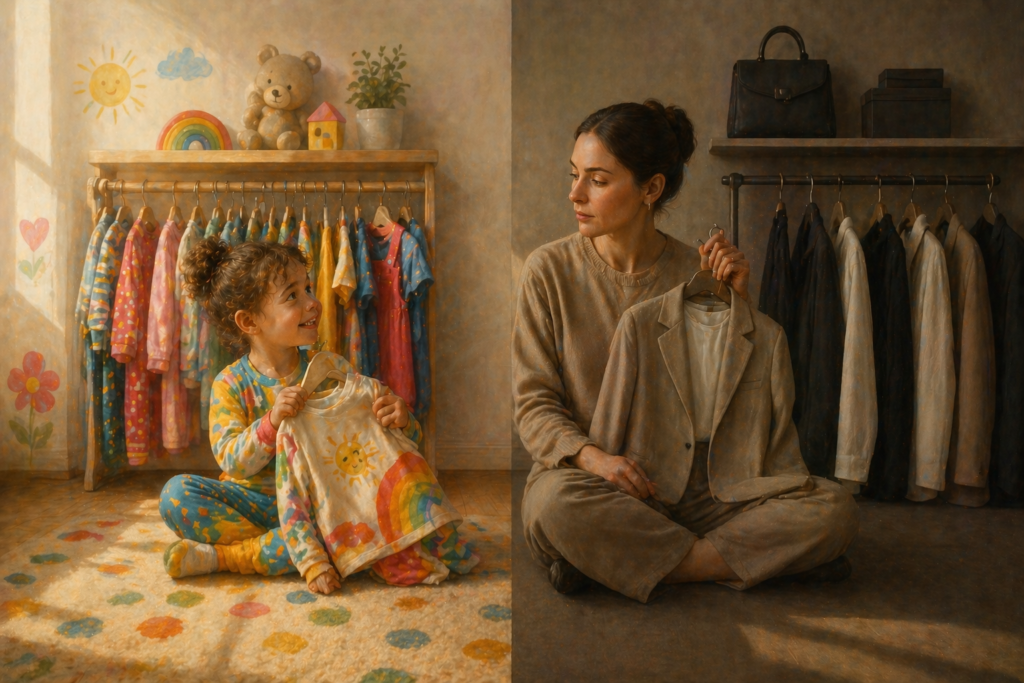
Getting Dressed Is Part of the Experience
It’s easy to focus only on how clothing feels once it’s on. But the process of putting it on matters just as much.
Some pieces guide the body naturally. Others require a pause — finding where something goes, adjusting, trying again.
Those small interruptions add up.
Over time, children tend to lean toward what feels predictable. Not necessarily because it’s more comfortable in a technical sense, but because it doesn’t slow them down.
The easiest items often share a few quiet traits:
- they don’t require explanation
- they go on the same way every time
- they don’t create hesitation in the first seconds
That simplicity becomes part of the comfort itself.
A Different Kind of Fit
Fit, in this case, isn’t just about measurements.
It’s about how clothing behaves while being worn. Does it stay in place without attention? Does it move with the body instead of reacting after the fact? Does it feel “finished” once it’s on?
These questions rarely come up when choosing something quickly.
But they define the difference between something that gets worn once and something that becomes part of a routine.
Where the Difference Actually Shows
The contrast isn’t always visible.
It shows in small moments — how quickly a child gets dressed, whether they adjust something during the day, whether they reach for the same item again without thinking.
That’s where why children’s clothes need to feel different from adult ones becomes clear. Not as a theory, but as a pattern that repeats itself quietly, day after day, in ways that don’t need explaining to be understood.