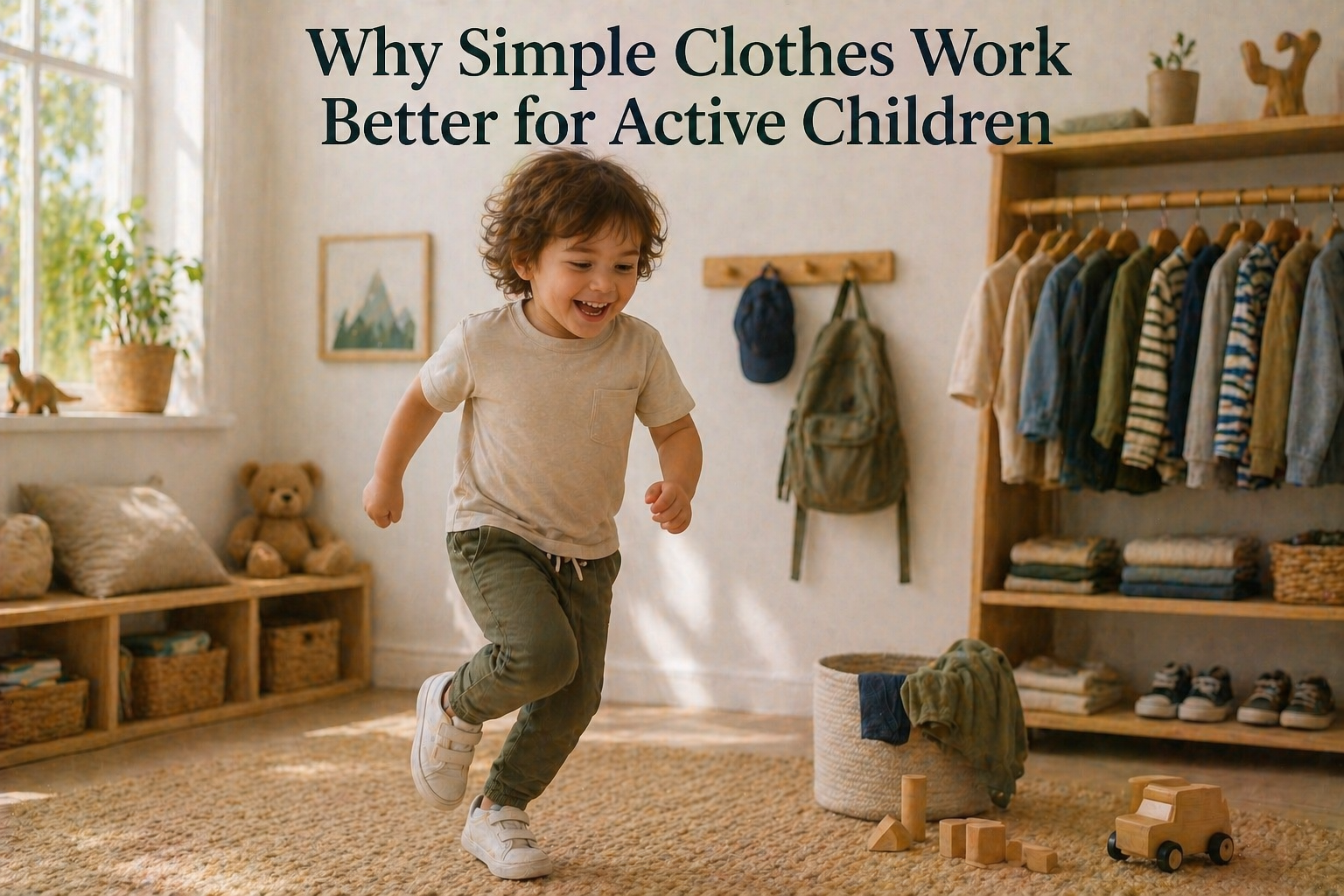

You don’t really think about it until you see it in action. A child runs, climbs, drops to the ground, gets back up — and some clothes just follow along, while others seem to slow everything down. That’s usually where why simple clothes work better for active children becomes clear, not in theory, but in movement.
Movement Doesn’t Wait for Clothes
Kids don’t adjust their behavior to fit what they’re wearing.
They move first. Clothes either keep up or get in the way.
Something with extra layers, decorative elements, or unnecessary structure might look interesting at first. But once the day actually begins, those details start to matter differently. They catch, shift, restrict, or simply feel like too much.
Simple clothing tends to avoid that problem.
It doesn’t ask for attention. It doesn’t require careful handling. It just moves.
When Complexity Turns Into Friction
There’s a quiet contrast you start noticing over time.
Clothes that seem more “designed” often come with small interruptions. Nothing dramatic — just enough to be felt.
A child might not explain it, but you can see the signs:
- they stop to fix something mid-play
- they hesitate before certain movements
- they lose interest faster in physical activity
It’s not always obvious what causes it.
But the pattern repeats.
And that’s where why simple clothes work better for active children begins to show — fewer details mean fewer points of friction.
Real-Life Energy Needs Space
Think about how unpredictable kids’ movement actually is.
They don’t follow a straight line from one activity to another. It’s constant shifting — running, sitting, climbing, rolling, reaching.
Clothes that work in that environment tend to share a few quiet qualities:
- they stretch or give without resistance
- they stay in place without constant adjustment
- they don’t have parts that interfere with motion
These aren’t features you notice right away.
But they define how long a child stays comfortable without interruption.
Simplicity Doesn’t Mean Basic
There’s a common assumption that simple equals plain or boring.
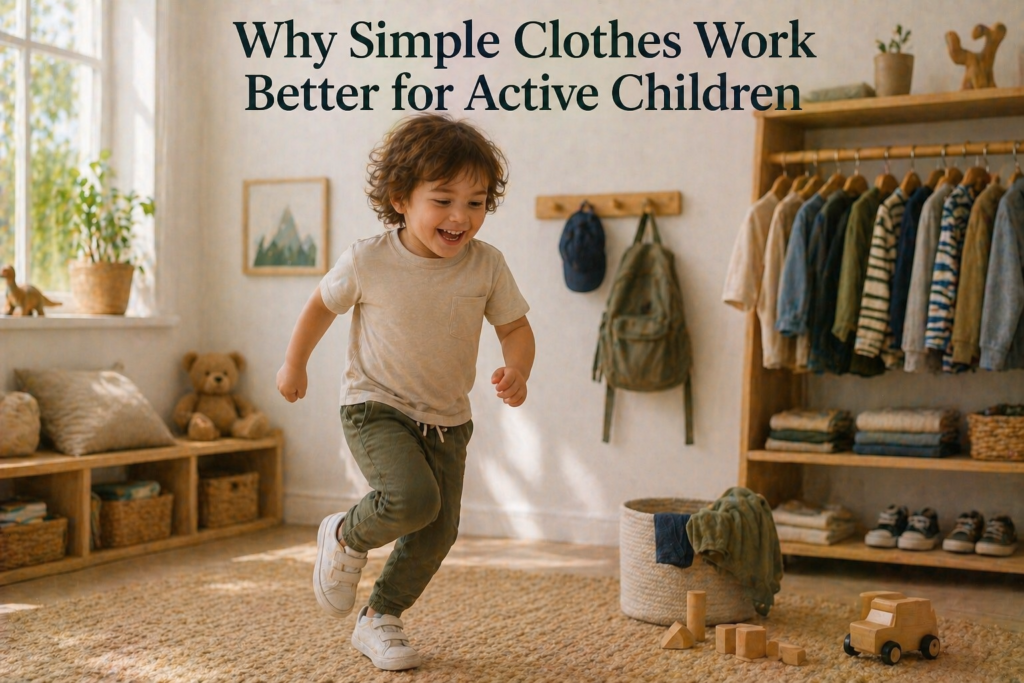
But in this case, simplicity is more about clarity than appearance.
It means removing what isn’t necessary for movement. It means letting the shape, the fabric, and the fit do the work without extra layers complicating things.
And interestingly, those clothes often end up looking better in real life — not because they stand out, but because they don’t break the flow of movement.
When Clothes Stop Being a Distraction
There’s a point where you stop noticing what a child is wearing.
Not visually — physically.
They’re not pulling at anything. Not adjusting. Not reacting to small discomforts. They just move, freely, without interruption.
That’s usually when the clothing is doing its job best.
Not by adding something.
But by staying out of the way.
The Quiet Advantage You Only Notice Later
At first, the difference seems small.
One outfit works a bit better than another. A child stays active a little longer. Complaints are fewer, even if they were never loud to begin with.
Over time, though, that difference becomes more noticeable.
Because ease adds up.
And in the end, why simple clothes work better for active children isn’t about choosing less. It’s about removing the tiny obstacles that shape how freely they move, explore, and stay engaged — until movement feels completely natural again.