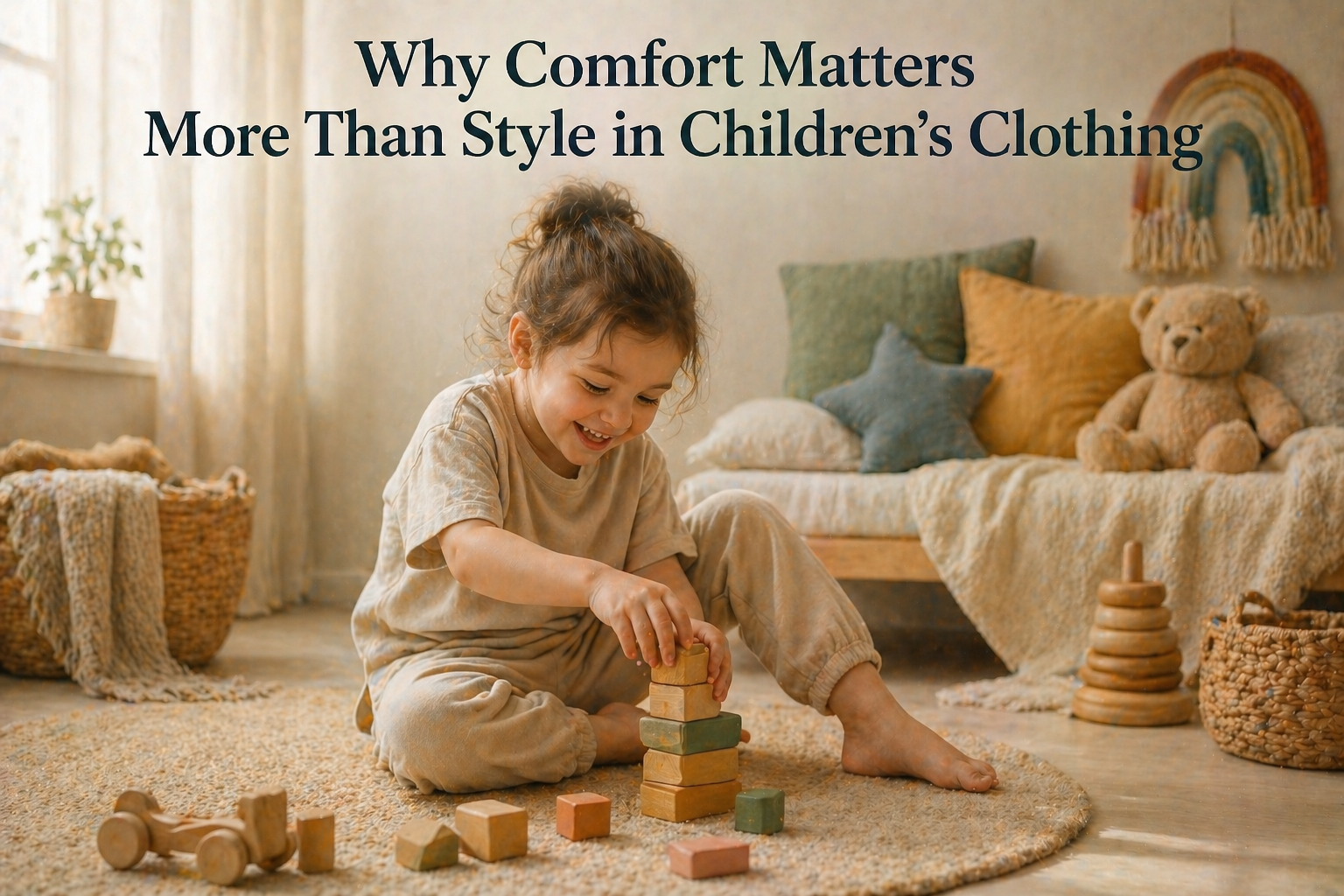

You can plan an outfit carefully, match colors, think about how it looks — and still watch it get rejected in seconds. That’s usually when why comfort matters more than style in children’s clothing stops being an idea and becomes something obvious.
What Adults See vs What Kids Feel
Clothing is often chosen visually first.
It looks good together. It fits the occasion. It feels like a complete outfit. From the outside, everything checks out. But kids don’t experience clothes from the outside — they experience them from the inside, through movement, pressure, and texture.
That difference changes everything.
A structured piece might look neat but feel restrictive. A fabric that appears smooth might feel irritating after a few minutes. Even something light can become distracting if it doesn’t move the way the body expects.
You’re looking at the outfit.
They’re reacting to the sensation.
And those two perspectives don’t always meet.
The Day Doesn’t Stay Still
Comfort isn’t tested in front of a mirror.
It’s tested over hours — through running, sitting, climbing, lying on the floor, getting up again. Kids don’t stay in one position long enough for “style” to matter on its own.
What matters is whether the clothing keeps up.
Some pieces adjust naturally. Others start to interfere:
- they shift and need constant fixing
- they hold heat longer than expected
- they create small points of tension during movement
None of this looks dramatic from the outside. But inside the experience, it builds.
And once that buildup starts, style becomes irrelevant.
When Discomfort Becomes the Focus
Children don’t always explain discomfort.
They react to it. They pull at sleeves, adjust waistbands, or lose focus more quickly. Sometimes they refuse the clothing entirely, without being able to say exactly why.
The body notices before the mind does.
That’s why a small issue — something barely noticeable at first — can become the only thing that matters after a while. It doesn’t need to be painful. Just persistent.
And persistence is what turns a minor detail into a reason to avoid something completely.
The Clothes That Get Chosen Again
If you watch closely, patterns start to form.
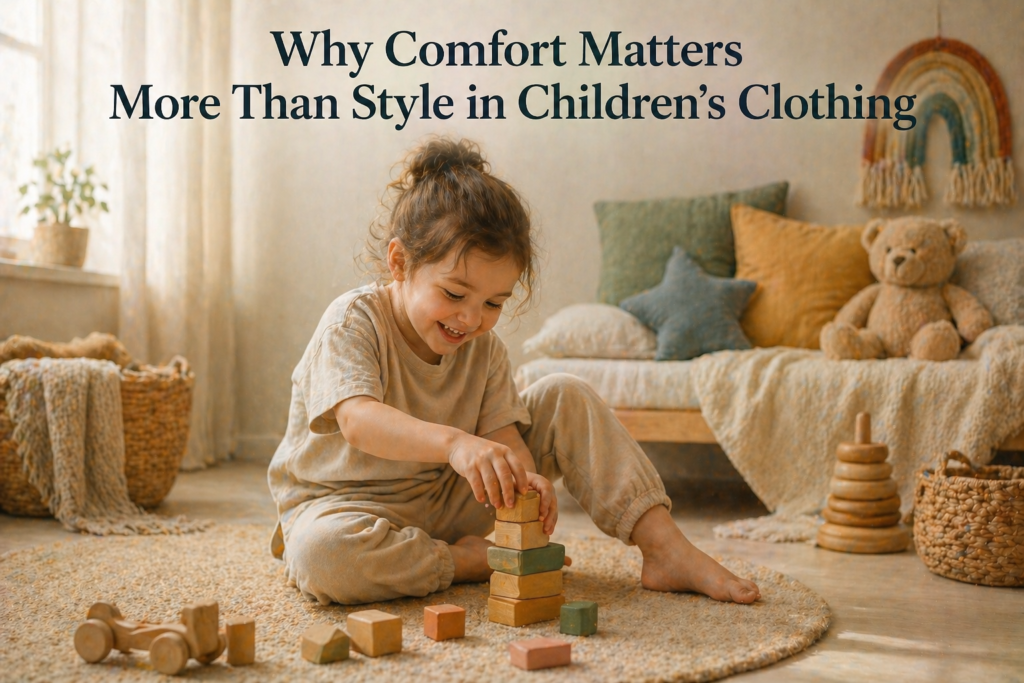
Kids return to certain pieces over and over. Not necessarily the most visually appealing ones, but the ones that feel consistent. The ones that don’t change throughout the day.
Those clothes tend to share quiet qualities:
- they don’t need adjusting after being put on
- they move the same way every time
- they don’t introduce new sensations halfway through the day
They’re predictable.
And predictability, for a child, often matters more than appearance.
When Style Follows Comfort
Interestingly, style doesn’t disappear.
It just shifts position. Instead of leading the decision, it follows it. Once something feels right, it becomes acceptable visually. Not the other way around.
That’s why forcing a “perfect-looking” outfit rarely works. It ignores the order in which kids experience clothing.
First comes comfort. Everything else builds from there.
A Different Definition of “Better”
From the outside, it’s easy to assume that better-looking clothes are better overall.
But once you start noticing how why comfort matters more than style in children’s clothing plays out in everyday moments, that assumption changes. The best clothes are the ones that don’t interrupt the day — the ones that allow movement, attention, and настроение to stay intact.
And those rarely stand out at first glance.
They just work. Quietly, without asking to be noticed.