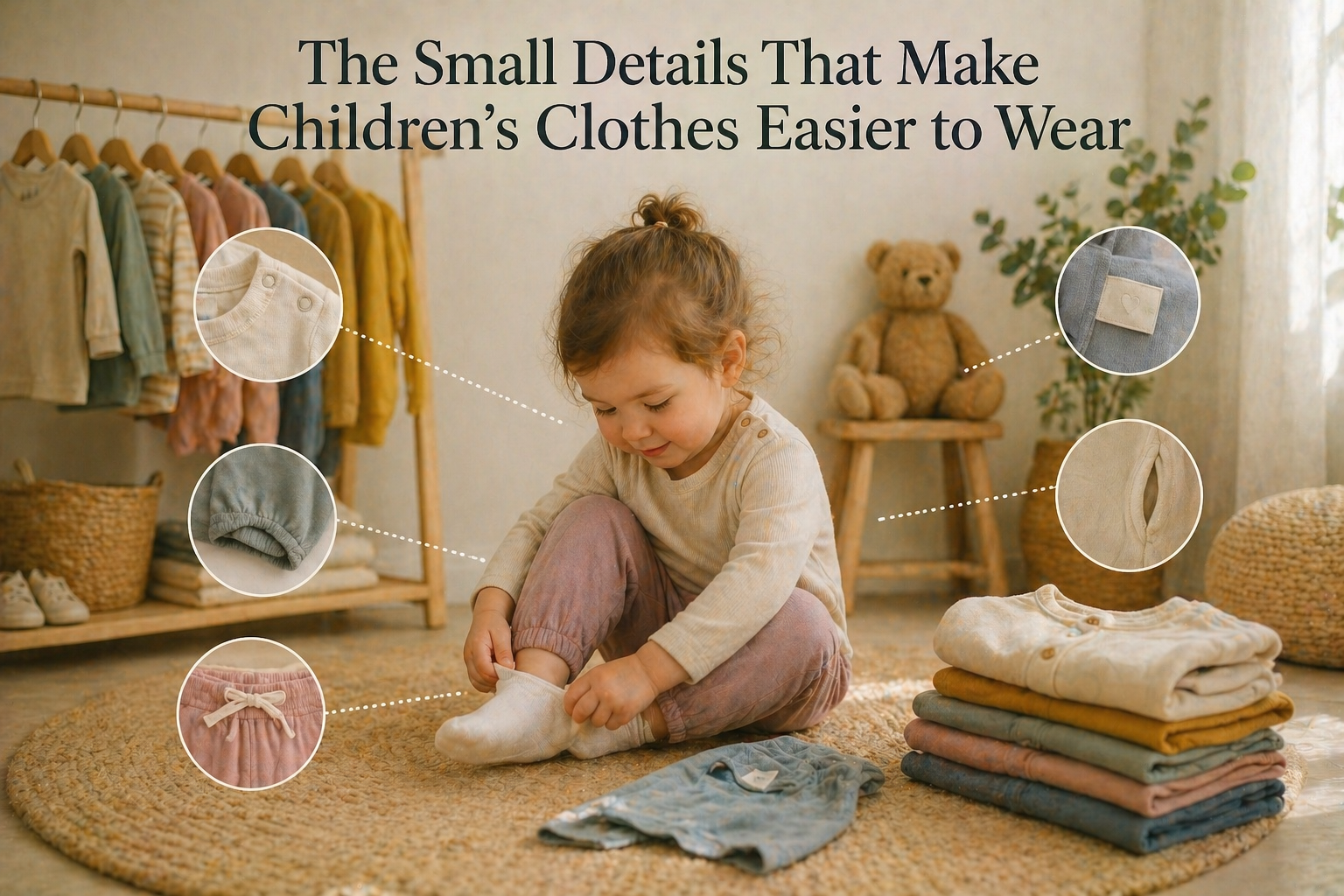

You don’t notice it when everything goes smoothly, but the small details that make children’s clothes easier to wear tend to show up on rushed mornings. Some pieces go on quickly without extra movement, while others suddenly create a pause — a small hesitation that turns into resistance.
It’s Often About the First Seconds
The moment clothing touches the body matters more than people expect.
A sleeve that slides on easily can make the whole process feel simple. But if a child has to search for the opening, twist their arm, or adjust twice before it sits right, that tiny delay already shifts the mood.
Nothing dramatic happens. Just a change.
And that change builds faster than it should. A slightly narrow neckline, a waistband that needs pulling into place, a fabric that doesn’t fall naturally — all of it adds friction. Not enough to explain out loud, but enough to slow everything down.
Some clothes feel intuitive right away. Others require effort, even if they technically fit.
When Design Gets in the Way
There’s a difference between clothing that looks neat and clothing that actually works.
Sometimes pieces are made with careful movement in mind. But kids don’t move carefully when they’re getting dressed — they move quickly, often distracted, sometimes impatient.
That’s when certain details turn into obstacles:
- openings that don’t guide the hand naturally
- fastenings that need precision instead of a quick motion
- layers that shift instead of staying where they should
Each of these on its own seems minor. But together, they create a process that feels more complicated than it needs to be.
And once dressing starts to feel complicated, it rarely becomes easier on its own.
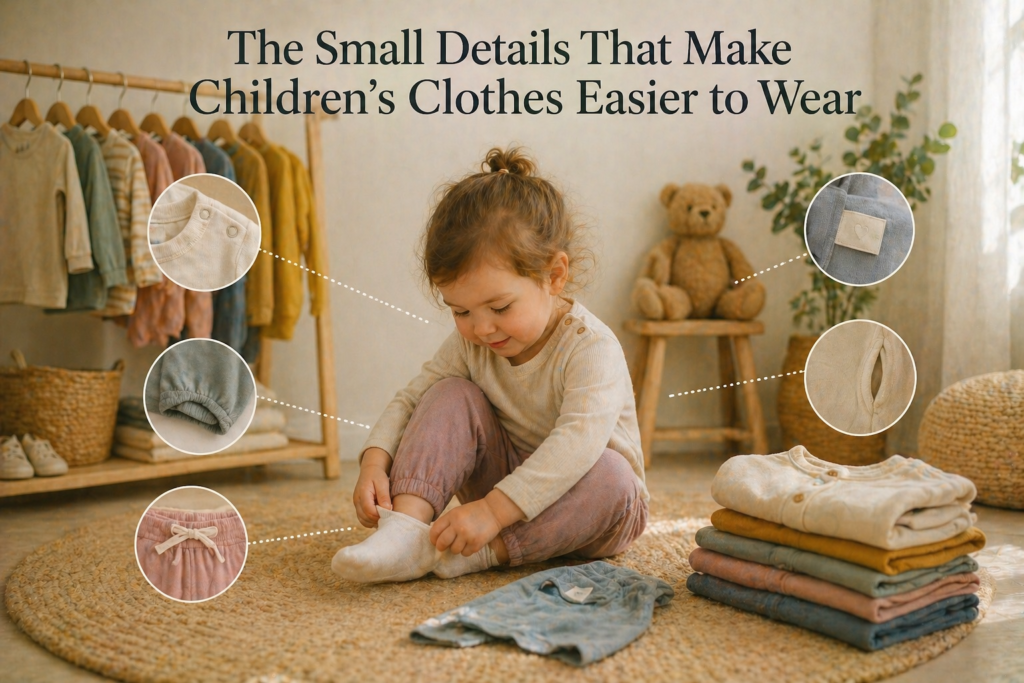
The Way Clothes Settle on the Body
Even after something is on, the experience isn’t finished.
Some clothes settle immediately. They fall into place, move naturally, and don’t ask for attention. Others take time — a few seconds, sometimes longer — before they feel right.
Children notice this more than expected.
If something needs constant adjustment, it never feels complete. It feels temporary, like it might need fixing again in a moment. That small uncertainty is enough to make a child hesitate the next time.
Over time, a pattern appears. The pieces that get worn again and again are usually the ones that don’t require a second thought.
Familiarity Makes Things Faster
There’s also something quieter happening in the background.
Children tend to prefer clothes they already understand. Not because they look better, but because the process is predictable. They know how it goes on, how it feels, and what to expect.
New items, even comfortable ones, can feel slightly uncertain at first.
This doesn’t make them worse. Just unfamiliar.
Eventually, the easiest pieces tend to share a few traits:
- they go on the same way every time
- they don’t introduce unexpected sensations
- they don’t need attention after being put on
That consistency becomes part of what comfort actually is.
Small Details, Big Difference
When you step back, it’s rarely about one obvious feature.
It’s a collection of small details that either support the process or quietly interfere with it. Most of them are easy to miss because they don’t stand out visually.
But they show up in behavior.
And once you start noticing how the small details that make children’s clothes easier to wear affect everyday moments, it becomes clear that ease isn’t accidental. It’s built into the clothing, piece by piece, long before anyone thinks about it.