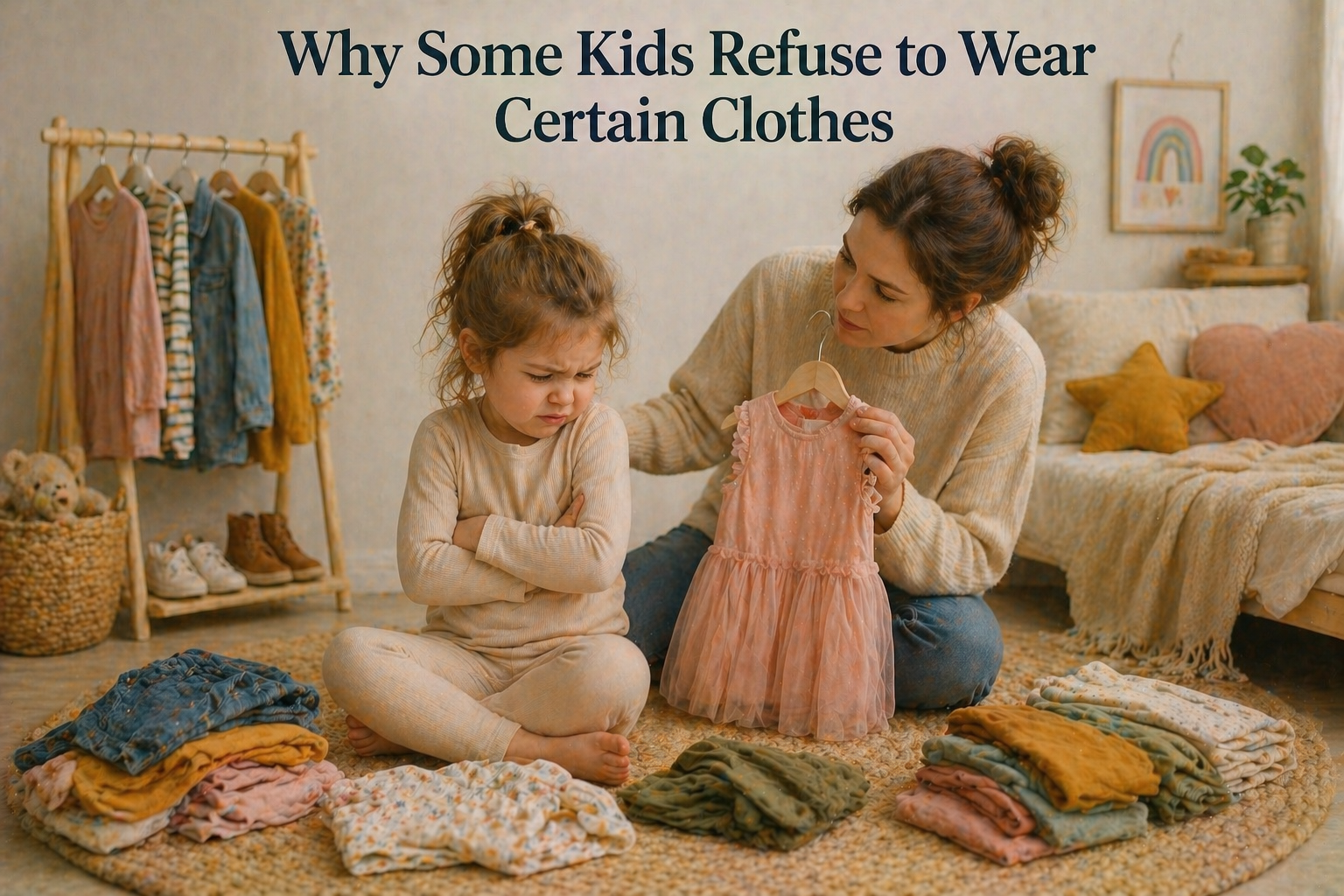

It often looks like stubbornness from the outside, but why some kids refuse to wear certain clothes usually has very little to do with mood. The reaction feels immediate, almost instinctive — and once it starts, it’s surprisingly consistent.
It Starts With Something Small
At first, nothing seems wrong.
The clothes fit. They look fine. Maybe they were worn before without any issue. And then, one day, a child refuses — not with explanation, but with certainty.
What’s easy to miss is how small the trigger can be. A seam that shifted after washing. A tag that was never noticed until now. Even a slight change in how the fabric sits on the skin can be enough.
Kids don’t always separate “minor discomfort” from “unacceptable.” If something feels off, even slightly, it quickly becomes something they don’t want near them at all.
And once that line is crossed, logic doesn’t help much.
The Difference Between Looks and Feeling
Adults often evaluate clothing visually.
Does it match? Is it clean? Is it appropriate for the weather? But children experience clothes differently — from the inside out. They notice how something presses, rubs, or restricts long before they care how it looks.
This creates a quiet conflict.
A perfectly “normal” outfit can feel completely wrong to them. Not because it is objectively uncomfortable, but because it doesn’t align with how their body expects to move or rest.
You might see a shirt. They feel tension in the shoulders.
You see soft fabric. They feel something slightly scratchy after ten minutes.
It’s not disagreement. It’s two different ways of noticing.
Movement Changes Everything
Stillness hides problems.
A child standing in front of a mirror might not react at all. But the moment they start moving — bending, running, sitting on the floor — the experience changes.
That’s when certain details show up:
- sleeves that twist just enough to bother
- waistbands that shift and need constant adjusting
- fabrics that stick when they shouldn’t
None of these are dramatic. But they repeat. And repetition turns small discomfort into something hard to ignore.
This is often where why some kids refuse to wear certain clothes becomes clearer — not in the first minute, but after movement reveals what static fitting doesn’t.
Control and the Need to Choose
There’s also something less physical happening.
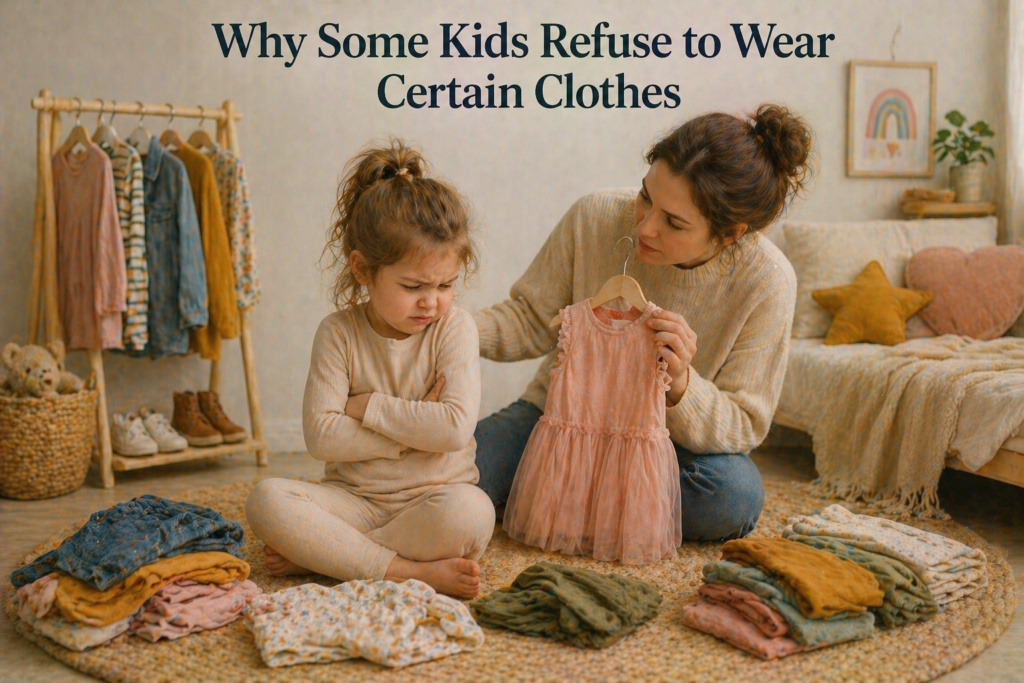
Clothing is one of the few things kids can fully accept or reject. They can’t change the schedule of the day or how long something lasts, but they can decide what feels okay on their body.
That choice matters more than it seems.
Refusal, in this sense, isn’t always about the clothes themselves. Sometimes it’s about maintaining control over something personal and immediate. Especially if the discomfort isn’t easy to explain, saying “no” becomes the simplest and most direct response.
Not all refusals come from the same place, but a few patterns show up often:
- discomfort that builds over time rather than instantly
- sensitivity to textures or pressure
- a strong preference for familiar, predictable items
These aren’t random preferences. They’re consistent responses to how something feels.
When One Experience Changes Everything
It only takes one bad moment.
A fabric that irritated the skin once. A tight neckline that made them uneasy. Even a situation where they felt uncomfortable and couldn’t fix it quickly — those experiences tend to stick.
After that, similar clothes get grouped together. Not consciously, but automatically.
So what looks like a sudden refusal is often a remembered feeling. Not the item itself, but what it once caused.
And because that memory is physical, not verbal, it doesn’t get explained — it just gets avoided.
A Quiet Pattern Behind the Resistance
When you step back, the pattern becomes more visible.
Kids don’t refuse randomly. They react to something specific, even if they don’t describe it. The challenge is that those reasons are often subtle, layered, and easy to overlook from the outside.
Understanding why some kids refuse to wear certain clothes isn’t about convincing them to change their mind. It’s about noticing what changed for them — even if it’s something small enough that it almost disappears unless you’re really paying attention.