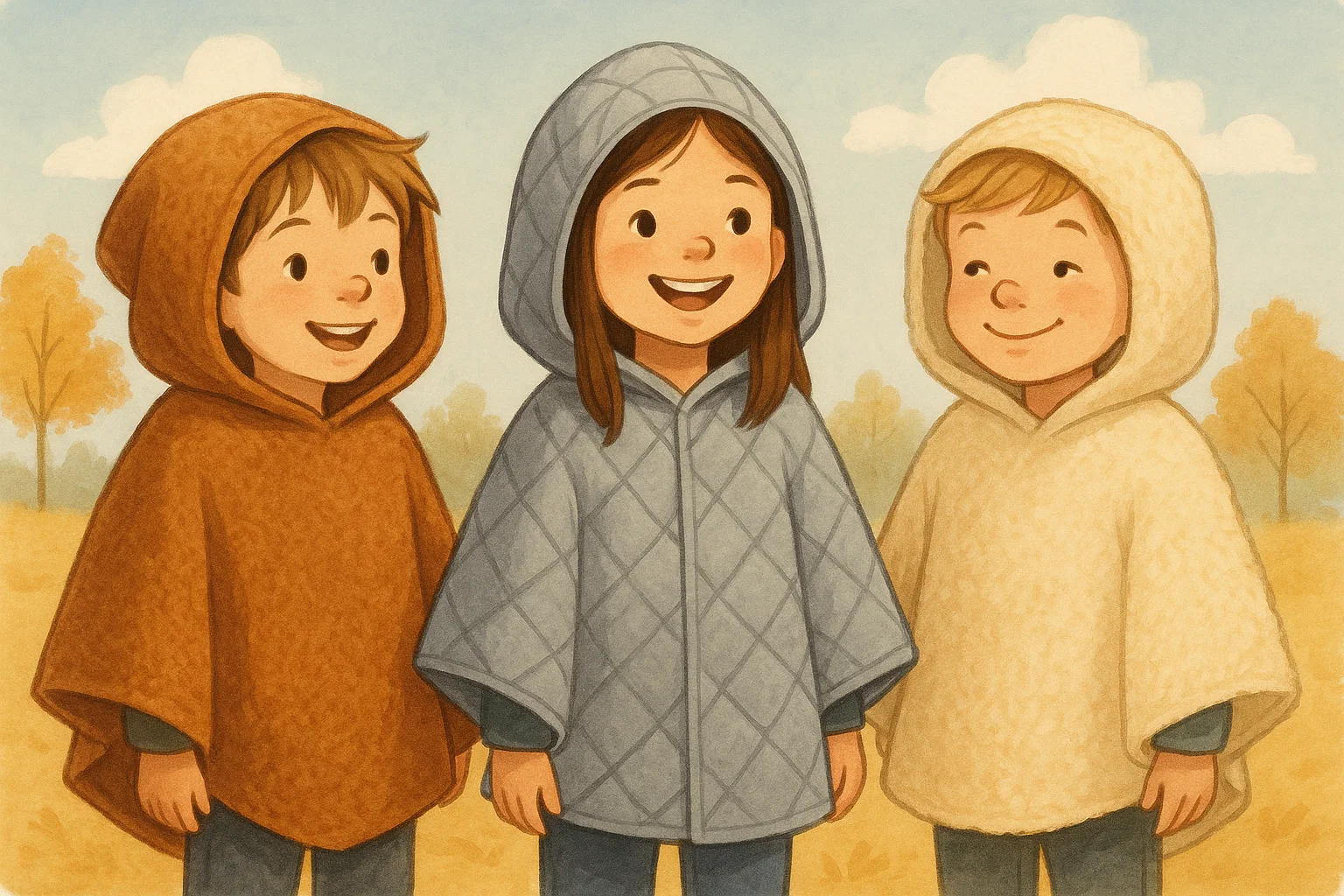


Children’s clothing should keep them warm without weighing them down. That balance isn’t always easy to find, especially when it comes to outerwear. It’s one reason parents often look for advice on Top Materials for Children’s Ponchos: Warmth Without Weight — because the right fabric can make all the difference between a garment that’s loved and one that’s left in the closet.
A poncho might look simple, but its comfort depends entirely on what it’s made of. Kids are sensitive to textures, and they quickly notice when something feels itchy, heavy, or uncomfortable. Choosing the right material helps ensure they stay cozy, free to move, and happy to wear it no matter the season.
The Gentle Feel of Cotton
When it comes to softness and breathability, cotton is often the first choice. It’s kind to a child’s skin and easy to care for, making it ideal for everyday ponchos. Lightweight cotton fabrics are great for warm weather, while thicker weaves or lined versions work well for cooler days. Parents also appreciate that cotton absorbs moisture naturally, keeping kids comfortable even after active play.
The appeal of cotton lies in how familiar and reliable it feels. It’s warm enough to take the chill off without trapping too much heat. For families who prefer simplicity and natural fibers, cotton ponchos strike a perfect balance between comfort and practicality. This makes it clear why Top Materials for Children’s Ponchos: Warmth Without Weight often includes cotton among the top contenders.
The Cozy Warmth of Fleece
Fleece ponchos are another favorite for both children and parents. Soft, plush, and surprisingly light, fleece keeps warmth close to the body without adding bulk. The texture is smooth on the inside and velvety on the outside, creating a comforting feel kids adore.
What makes fleece stand out is how it manages insulation — trapping body heat while still allowing air to circulate. It dries quickly, which makes it perfect for damp mornings or after swimming lessons. And since the fabric doesn’t wrinkle, it’s always ready to wear straight from the drawer. The combination of warmth, softness, and low maintenance shows exactly why this material fits so well into discussions of Top Materials for Children’s Ponchos: Warmth Without Weight.
The Natural Strength of Wool
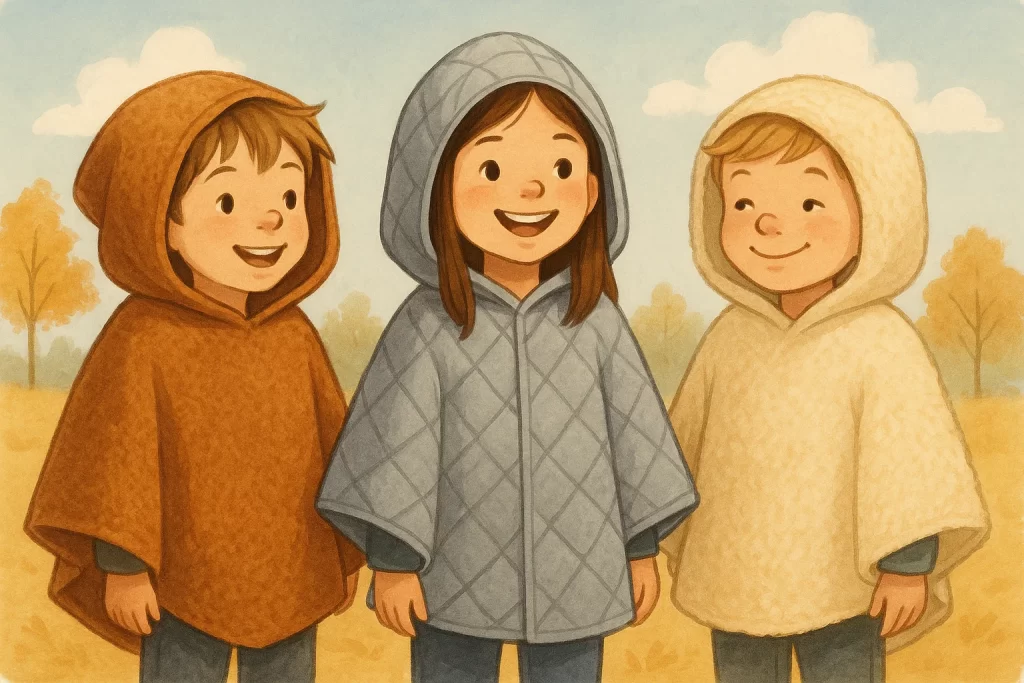
For chillier days, wool remains a timeless option. It’s known for excellent heat retention while still allowing the skin to breathe. A wool poncho offers lasting comfort during outdoor walks, autumn outings, or family trips. The fibers naturally regulate temperature — keeping children warm when it’s cold and preventing overheating indoors.
Modern wool blends have become softer and lighter than the heavy versions of the past. Many designs mix wool with cotton or acrylic, reducing itchiness and making them easier to wash. When chosen thoughtfully, a wool poncho becomes both a stylish and functional piece that can last through several seasons.
The Modern Touch of Microfiber
Microfiber fabrics have earned their place in children’s wardrobes thanks to their practicality. They’re lightweight, water-resistant, and durable — all qualities parents value in activewear. A microfiber poncho can handle outdoor adventures without losing shape or softness.
Unlike thicker materials, microfiber doesn’t feel stiff or heavy. It moves easily with the body and dries fast, which means it’s great for travel or unpredictable weather. For families looking for a long-lasting, easy-to-clean solution, microfiber is an excellent modern choice.
Conclusion
When exploring Top Materials for Children’s Ponchos: Warmth Without Weight, it’s clear there’s no single “perfect” fabric — but several that offer their own advantages. Cotton gives breathability and comfort, fleece brings softness and warmth, wool adds natural insulation, and microfiber provides practicality for active days. The right material depends on the season, the child’s needs, and a bit of personal preference. What matters most is that the poncho feels light, warm, and easy to love — just like childhood itself.